Incorporating biodiversity into farms and orchards is increasingly about its function as part of a resilient, productive, and lower-impact horticultural system, rather than as a separate environmental add-on.
This was a key finding from a survey examining biodiversity-enhancing activities and pest-management practices in New Zealand horticulture undertaken for A Lighter Touch by Lincoln University researchers Peter Tait and John Saunders.
The survey was undertaken to help inform development of a cost-benefit model of biodiversity enhancement as part of a cross-sector A Lighter Touch project focusing on biodiversity economics. The cost-benefit analysis tool aims to provide growers with a better understanding of the economic benefit of incorporating on-farm biodiversity.
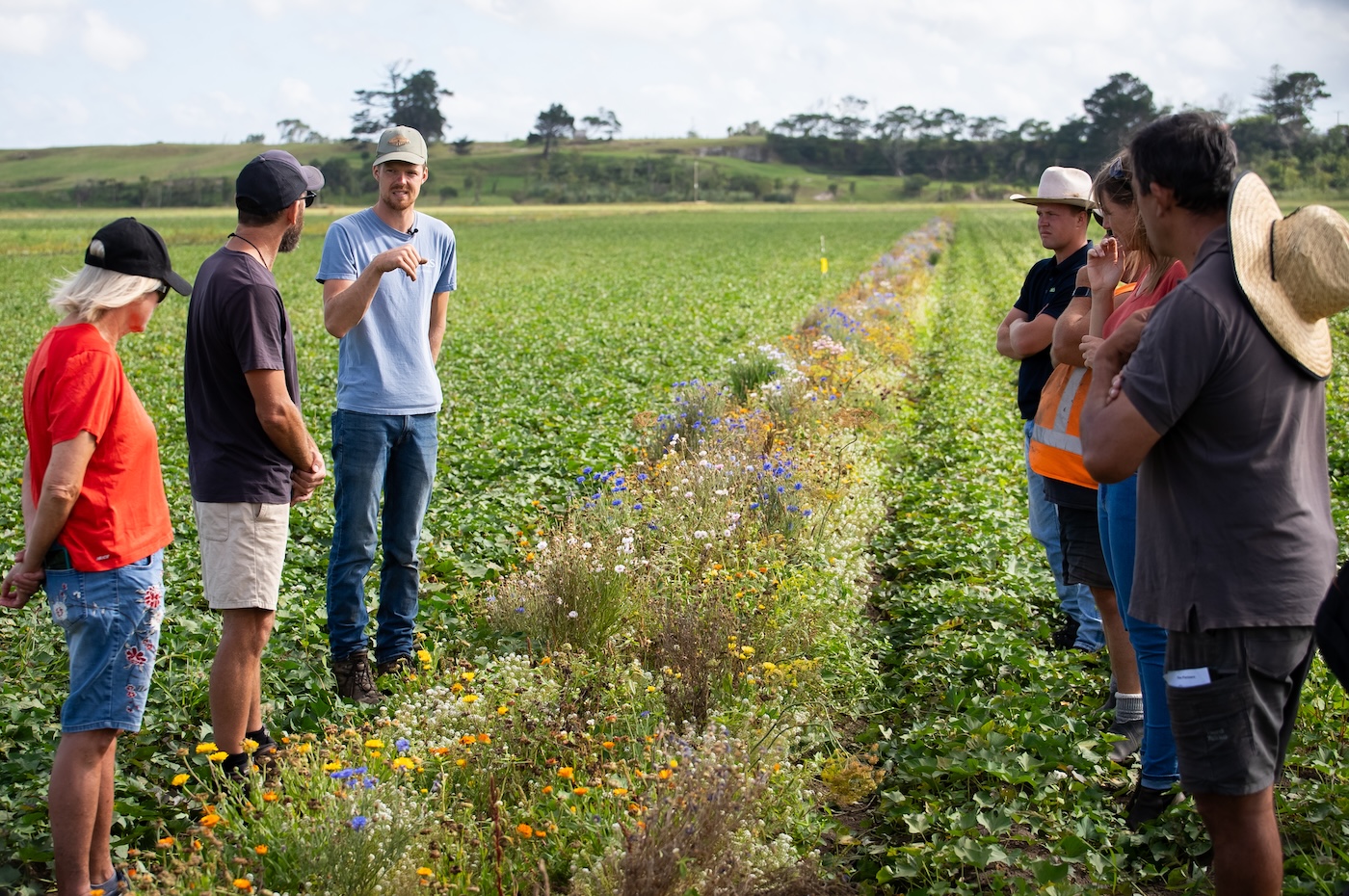
An annual flower strip is observed by attendees during a biodiversity project field walk in Dargaville.
Three ALT programme partners, the Foundation for Arable Research (FAR), Vegetables NZ and Zespri, are testing the tool that has been developed to provide feedback to ensure usability, functionality and suitability for growers. Developed by John Saunders of Lincoln University, the tool will be published on the ALT website this summer.
The tool was informed by data from the online survey, which attracted 94 respondents familiar with or responsible for pest management decisions for a horticultural enterprise.
Survey findings showed biodiversity-enhancing activities were widespread, with most respondents already undertaking at least one activity. The most reported activities fitting within existing farm and orchard systems were reduced soil disturbance (60%), cover crops, green manures or permanent groundcover (52%), hedgerows, shelterbelts or flowering edge plantings (48%), and maintaining native or natural habitat near production areas (47%).

Native perennial plantings, alongside crops at the Pukekohe Research and Demonstration Farm.
Spray-related biodiversity enhancing practices were also common, with the most frequent being the use of more selective or softer spray products (60%), followed by targeted or threshold-based spraying decisions (56%) and reduced or no use of broad-spectrum insecticides or pesticides (52%).
Growers’ motivations for incorporating biodiversity-enhancing activities were strongly practical. Improving crop production or quality and improving soil health or water management were the two most commonly identified reasons, each ranking in the top three by 50% of respondents. Environmental stewardship, reduced spray use, reduced pest pressure, and meeting market, buyer or certification expectations were also important.
The survey revealed interest from growers in doing more, particularly where practices can be integrated into existing production and pest-management systems. Use of biopesticide spray products was the leading activity respondents were considering starting or expanding, followed by maintaining native or natural habitat, using more selective or softer spray products, reducing broad-spectrum insecticide or pesticide use, and using cover crops or permanent groundcover.

An example of a cover crop.
However, what was also clear was that while the willingness is there, growers need confidence. The leading barriers were lack of financial incentives or recognition (30%), risk of crop loss, pest damage or downgrading (28%), and uncertainty about production or cost-saving benefits (27%).
Examples of support that would motivate further adoption included financial assistance, clear evidence of production or cost-saving benefits, demonstrations on commercial orchards or farms, and market recognition, certification or a price premium. The cost-benefit analysis tool is designed to help answer some of these questions by addressing barriers such as the economic impact of a biodiversity investment.
The survey found many growers are already using monitoring-informed pest-management decisions (67%), and beneficial insects influence spray decisions for most respondents (82%). This provides a strong basis for linking biodiversity enhancement to integrated pest management, beneficial insects, spray-risk reduction, and more selective pest-management approaches.
- Download survey report.

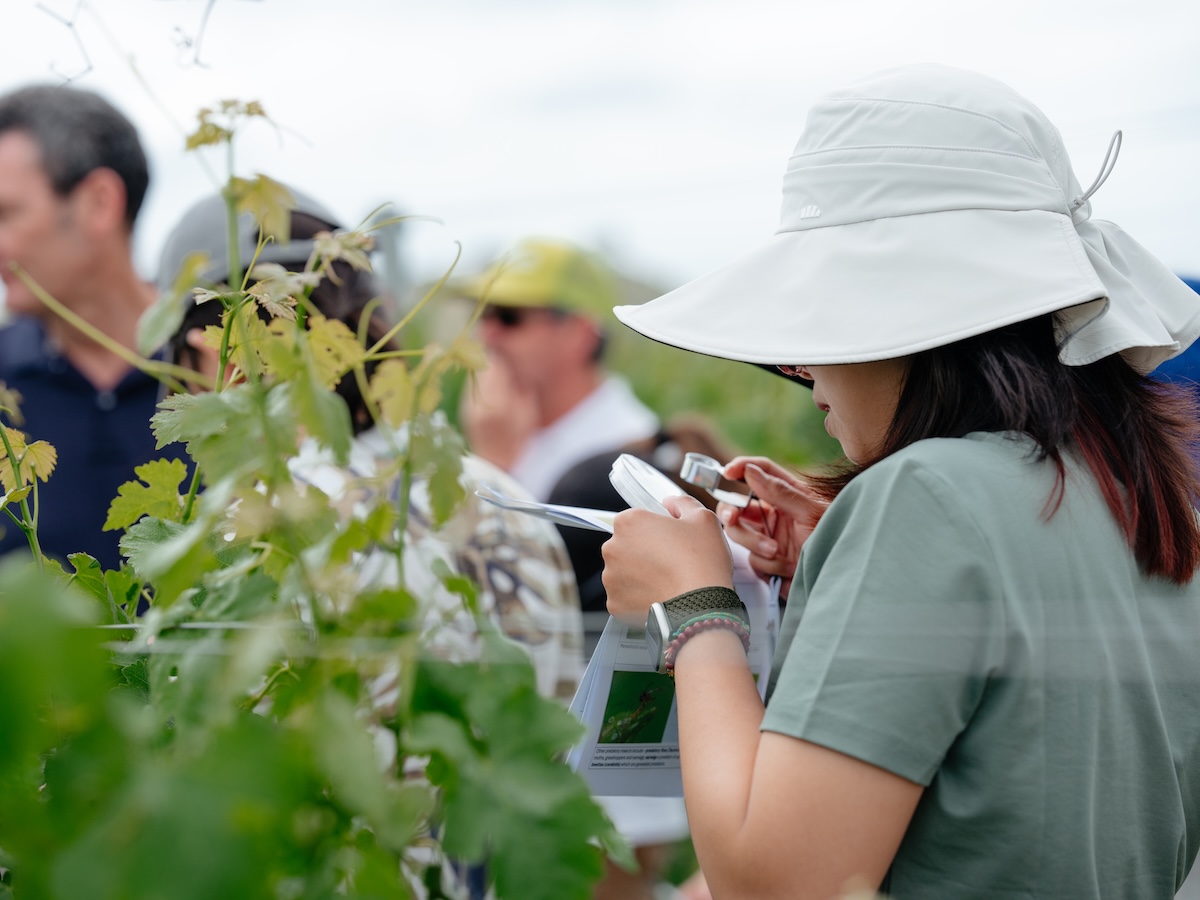
Ateendees at field day practice scouting for pest insects in winegrapes.