

Lack of grower education and extension, and a sales model treating biological crop protection solutions as if they behave like chemicals are key factors holding back grower adoption worldwide.
That’s the view of a group of global industry leaders spanning biocontrol, biostimulants, and integrated biosolutions, and their analysis aligns with findings from A Lighter Touch’s work in this area.
ALT programme director Livia Esterhazy says the two-year ALT biologicals awareness and integration project pointed to the exact same barriers expressed in a recent international article Why Aren’t Biologicals Scaling Faster – Despite All the Innovation?, published in AgNews.
“Biological crop protection products are living organisms, and come with a complexity that requires specialised extension to support growers successfully integrating them into their existing crop protection programmes.
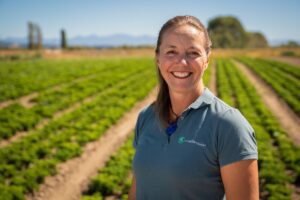
A Lighter Touch programme director Livia Esterhazy.
“The biopesticide case study we undertook looking at commercialisation and extension of biological products was very clear. Efficacy is an important factor in grower adoption, but equally vital is grower education and extension to support successful uptake.”
The AgNews article discusses the barriers created by biologicals being treated and sold as products, instead of enablers of better agronomic decisions and management. It points to a distribution model that has attempted to channel the sale of biologicals down the same path as chemicals, despite the clear differences between the two.
The lack of specialised support for adoption of biologicals has impacted grower confidence in them, understanding of their use and performance of products through factors such as incorrect application and storage.
This position is backed up by ALT’s Training Needs Analysis report, which undertook research to understand the extension capacity and capability in the horticulture, viticulture and arable sectors in New Zealand.
It found a commercial bias in the structure of advisory services in New Zealand, and although this model supports access to technical information, it also creates a preference towards product-based solutions.
“Ultimately, there is a misalignment between the commercial drivers of the current advisory model and the long-term goals of agroecological transition. Even when scientific evidence supports a non-commercial solution, it may struggle to gain traction if it falls outside the remit of what an advisor is expected or resourced to deliver.
“As a result, the system may be reinforcing the status quo and slowing the uptake of more sustainable practices. Focus group participants described this as a major challenge, particularly for approaches that require systems thinking, long-term planning, or collective action—areas that commercial advisory models are not typically set up to support,” the report found.
Livia says the findings of the Training Needs Analysis, undertaken as part of the wider biological project, led to targeted extension training for ALT sector partners.
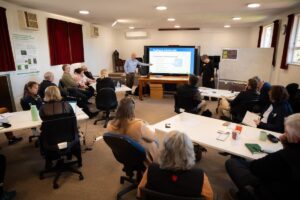
A workshop focused on agricultural extension.
“Knowing there was a systemic gap in the ability to extend biological products to growers, we mapped existing capabilities and worked to support our programme sector group partners upskill in extension – including running workshops, creating resources, step by step guides, podcasts, webinars and videos.”
This focus on increasing extension capability lines up with the views expressed in the AgNews article, which points to education of growers as the “missing link”.
“Surveys repeatedly show that roughly half of farmers feel insufficiently educated about biologicals, a figure that has remained stubbornly unchanged for years. Until advisors, retailers, and manufacturers invest as heavily in knowledge transfer as they do in product development, adoption will continue to underperform potential,” the article says.
Livia says ALT’s approach of upskilling extension specialists, developing tailored extension resources, developing an Extension Community of Practice, and supporting knowledge transfer with hands-on demonstrations and workshops, is contributing to setting the scene for biologicals uptake to increase in New Zealand.
“I agree with AgNews that education around biologicals is vital. The more investment we see across the industry in knowledge transfer, the faster we’ll see growers adopting and effectively integrating biological products so they become a core component of their crop protection programmes.”

Growers attend a workshop to learn about IPM at the Pukekohe Research and Demonstration farm.
More information on the resources, case studies and guides produced during the ALT biologicals awareness and integration project are online here.
ALT extension resources are located here.
