
Finding a solution to weed management in annual biodiversity flower strips is the focus of a trial this season evaluating a range of herbicide and establishment strategies.
The objective of the trial at the Pukekohe Research and Demonstration Farm is to reduce weed pressure in biodiversity flower strips, without harming the growth and flowering performance of the flower strip.
The trial stems from work undertaken in the Vegetables NZ-Onions NZ-ALT biodiversity project, where growers demonstrating the use of annual flower strips for pest management benefits have been looking to solve the challenge of how to manage weeds in the flower strips.
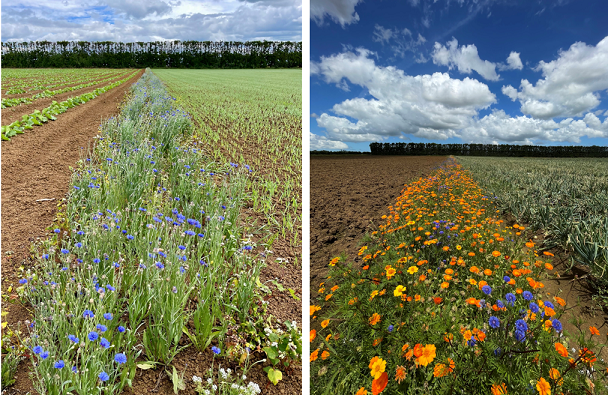
The annual flower strips in January 2023 (left) and in January 2024 (right), following the addition of two extra species to the seed mix. Credit: Olivia Prouse.
Funded by A Lighter Touch and Vegetables NZ, the trial work will begin this month.
Alongside an untreated control and a plot using a higher flower mix sowing rate, the other six treatments in the trial will involve four application strategies:
- a residual herbicide before sowing,
- a residual herbicide before sowing and a knockdown herbicide once weeds are present,
- a knockdown herbicide post-sowing but before flower strip emergence, and
- a stale seedbed approach allowing weeds to germinate and then a knockdown herbicide before sowing (with minimal soil disturbance).
In the higher sowing rate treatment, a rate of 100kg/ha will be used, double the rate in the other treatments, to determine if greater crop competition assists with weed suppression and compensates for uneven establishment.
For each treatment, weeds will be identified and counted, and the emergence and performance of the flower strip species will be monitored at key points until full flowering of the flower strip occurs (approximately 55 to 65 days).
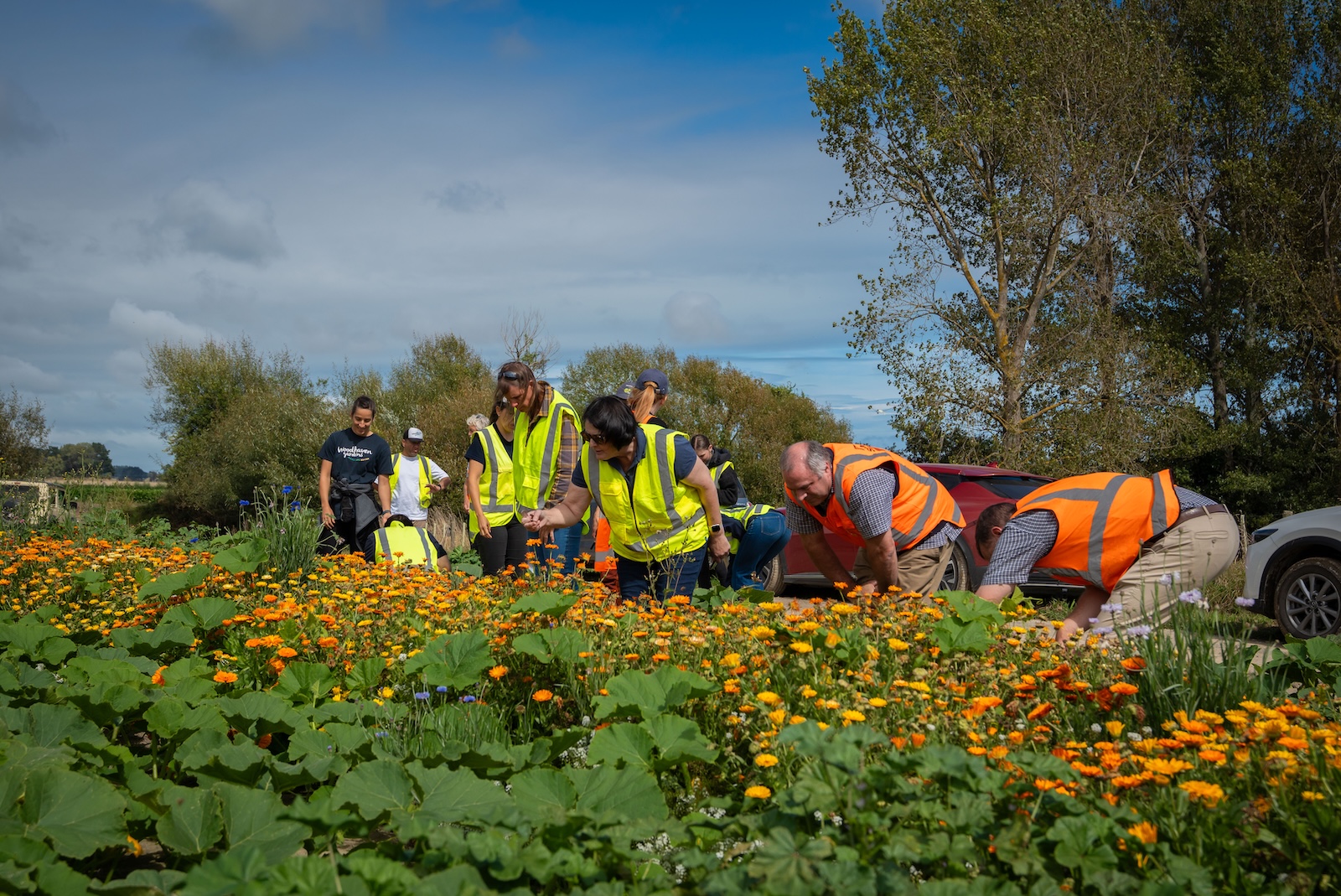
Field walk attendees scouting for pests and beneficial insects in a flower strip at Woodhaven Gardens, Levin during a field walk.
Key weeds being targeted are fathen, redroot, black nightshade, mallow and chickweed. The flower mix being used is made up of buckwheat, white alyssum, calendula, marigold and cornflowers.
Trial results will be shared in the ALT newsletter and on the project page once completed.
