

A new report shows the A Lighter Touch (ALT) programme is achieving results and building momentum with growers shifting to agroecological crop protection (ACP*) practices.
The report by monitoring and evaluation specialists Scarlatti shows 92% of growers surveyed about their crop protection practices are already integrating ACP elements into their pest, disease and weed management, and the majority (69%) are using one to three ACP practices.
More than a fifth (22%) of growers have integrated multiple approaches (more than four ACP practices) into their systems.
Growers’ attitudes towards ACP were largely positive, with 40% seeing “a lot of value” in ACP and more than half reporting their views on ACP have become more positive over the last five years.
Insights around ACP progress have been collated into the report by Scarlatti, who are undertaking a monitoring and evaluation (M &E) programme measuring ALT’s impact and progress towards short and medium-term outcomes, since the programme started in 2020.
ALT’s Programme Governance Group chair David Tanner says the results from the monitoring and evaluation are really pleasing and reflect a lot of hard work from everyone involved.

PGG chair David Tanner
“Growers can be assured that with the programme now in its final 18 months, our focus will continue to be on delivering results and value to ALT’s sector partners. We are proud of what we have achieved, but there is still more to be done.”
Data for the monitoring and evaluation report was collected through interviews with 13 ALT sector group representatives and an online crop protection survey, answered by 74 growers and advisors.
The report found the shift in grower practice and attitudes towards ACP has occurred simultaneously with ALT’s work. “This alignment suggests that ALT’s investment is likely to be an important contributor to this movement.”
ALT and sector group partners’ projects have helped to generate credible evidence and exposure to ACP for growers. Sector groups themselves have become important messengers for ACP to growers using a wide range of channels.
By providing platforms and tools for projects and supporting sector groups with extension, the flow on effect from ALT is greater knowledge and stronger interest in ACP across the sector.
ALT’s role as ACP champion, producing resources, newsletters and technical information has “[made] the concept of ACP more practical and visible, ALT has enabled growers to trial, trust, and adopt ACP at a faster rate than would likely have occurred otherwise,” the report found.
Findings reinforced that collaboration between sector groups has deepened under ALT with two areas standing out; delivering joint extension events and sharing project learnings.
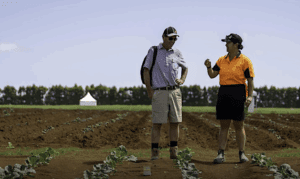
Field day event at the Pukekohe Research and Demonstration Farm.
The Pukekohe Research and Demonstration Farm was mentioned by many respondents as a focal point for face-to-face events, involving multiple sectors such as Vegetables Big Day Out with Vegetables NZ and Onions NZ and the IPM workshop series with FAR, Onions NZ, and Vegetables NZ.
Cross-sector learning opportunities have been created elsewhere too, such as Zespri opening up field days to other sectors.
The report noted where sectors face a similar disease or pest challenge, research collaboration has occurred, as has broader cross-sector collaboration on initiatives. ALT has been described as the “enabler”, providing structure and conditions for sectors to connect and share information and practical knowledge.
Examples of this collaboration included the UV-C treatment for disease control projects by Summerfruit NZ and Bragato Research Institute, and the Summerfruit NZ understory project drawing on lessons from the Citrus NZ biodiverse planting in perennials project.

UV-C light treatment being trialled in a Central Otago cherry orchard.
Interviewees said collaboration has improved relationships, created opportunities to share knowledge and pool resources, and enabled more consistent industry messaging.
Almost all interviewees agreed that they now have “a more positive/closer relationship with other sectors” and had developed “a deeper understanding of what others are doing”.
ALT has aligned the sector direction to help industry respond to market expectations and regulatory change. By bringing sector groups, researchers and industry partners together, a consistent collaborative effort to focus on more sustainable solutions has developed, the report said.
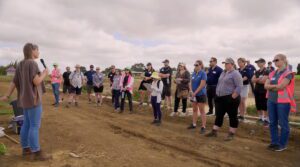
Collaboration has improved cross sector relationships and knowledge sharing as product groups are opening up events to others.
In addition to Scarlatti’s report, further evaluation of ALT’s impact is being undertaken, with the NZ Institute of Economic Research conducting an economic analysis and Bioeconomy Science Institute, Plant & Food Research group, analysing crop protection trends in the industry.
*Agroecological crop protection was defined as a more integrated approach to crop protection, which in addition to agrichemicals, uses a combination of new technologies, biological tools, and cultural practices such as crop rotation, cover crops, and biodiverse planting.
