

In a case of it’s a small world, the mobile biodiversity insectary concept has travelled from Pukekohe to the United Kingdom, only to catch the attention of an Australian agricultural extension officer.
Australia Pacific Extension Network (APEN) regional coordinator for Tasmania, Tayla Field recently wrote about her experience of seeing a modified version of the insectary pods at G’s Group vegetable farm in Ely, Cambridgeshire. The pods provide shelter, nectar, alternative hosts and pollen for beneficial insects to support pest management.
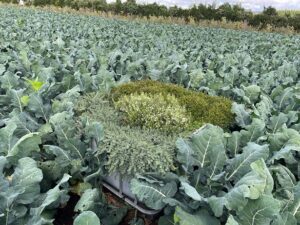
Mobile insectaries of native plants at the Pukekohe Research and Demonstration Farm are used to enhance beneficial populations and support pest management.
A few weeks after Tayla saw of the pods in action at G’s Group in the UK, she visited the Pukekohe Research and Demonstration Farm and discovered where the concept originated, as one of three biodiversity components being demonstrated at the farm as part of the Vegetables NZ-Onions NZ-A Lighter Touch biodiversity project.
Tayla’s article was published in the APEN August e-bulletin and includes insights into what the foundations are for good agricultural extension.
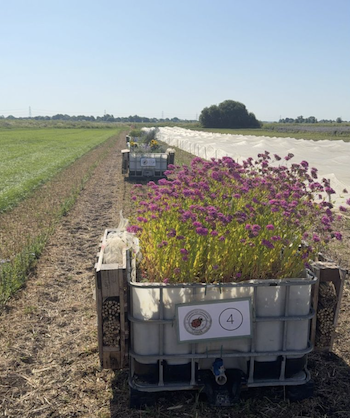
G’s Group pods in Ely, Cambridgeshire. Credit: LinkedIn
Tayla shared the reverse journey of the pods from the UK, to Tasmania, and then to Pukekohe, via LinkedIn, demonstrating how interest in the pods concept is continuing to grow – their global use is beyond the scope of what the Vegetables NZ-ALT project team ever anticipated.
Thanks to APEN for permission to share Tayla’s article in the A Lighter Touch newsletter. For the back story of how G’s Group adopted the mobile insectary concept after first seeing it at Pukekohe, read the article in July’s edition of In Touch.
Read the APEN article here.
