

When designing an extension plan, conducting a pre mortem, and imagining everything that could go wrong in your project, is a way to help you overcome the risks of failure.
That’s an insight attendees took away from extension workshops, hosted by A Lighter Touch and facilitated by extension experts Denise Bewsell and John James.
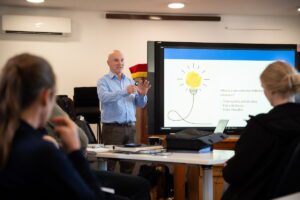
Enablers of Change director John James presents at the workshop.
During the workshops, A Lighter Touch (ALT) product group representatives, agronomists and advisors working in extension learned about the importance of extension planning, how to create an extension plan in six steps and how to use a theory of change model to develop their plan.
The participants came prepared with their own projects in mind and used these real life examples to practice using the tools and processes presented, enabling an applied approach to the training.
The workshops, held in Pukekohe and Lincoln, are part of the ALT biologicals awareness and integration project. The focus is on increasing knowledge and understanding about the use of biological crop protection tools and how to successfully integrate them into an existing crop protection programme. Extension specialists Scarlatti are working with ALT on this project.
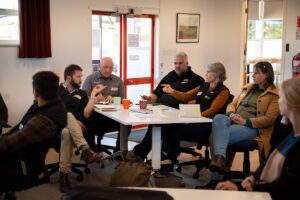
Pictured (from left) are Pukekohe workshop participants Daniel Sutton (Vegetables New Zealand and Onions New Zealand), John van Linden (Corteva), Jason Greene (Farmlands), Wilma Foster (Zespri), biodiversity project lead at the demonstration farm Olivia Prouse.
Online workshops focusing on monitoring and evaluation and audience segmentation are also being held. Scarlatti are providing advice and input to ALT product groups on work specifically focused on extension of knowledge about biological crop protection tools.
Feedback from those attending the extension workshops included attendees saying they felt more confident in developing an extension plan and applying it to their work. Along with practical tools to use, the workshops also discussed best practice for adult learning, the history of extension, and the role of monitoring and evaluation in informing and improving an extension plan.

Attendees taking a break during the session.
