

Addressing cross-sector priorities and crop-specific needs are the main aims of efficacy trials for the upcoming and final season of the A Lighter Touch (ALT) programme.
Seven efficacy trials have been approved as part of ALT residue and efficacy work for the 2026-27 season, with further trials still being finalised.
ALT technical lead Bruno Gatimel says the trials will contribute to work already underway to identify alternatives for organophosphates and synthetic pyrethroids – chemistry which is being phased out.
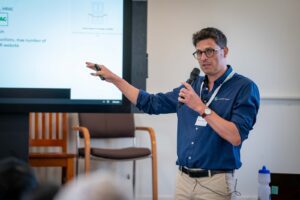
ALT technical lead Bruno Gatimel presents at Vegetables Big Day Out, March 2026.
“We’re building on the success of last season’s trials and continuing work on specific crops’ priority pests, while other trials are focusing on high-priority crop protection control gaps in the trial crops.”
Along with sector specific foliar diseases, pests being targeted include green vegetable bug (GVB), aphids, moths and whitefly.
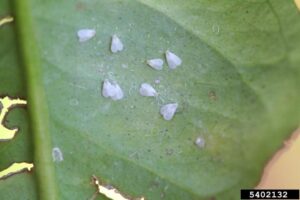
Citrus whitefly is a pest being targeted in trials.
Trials will evaluate soft synthetic chemicals, physical mode of action sprays, and biological products in several different locations including Pukekohe, Hawke’s Bay, Gisborne and Canterbury.
The efficacy trials are occurring in:
- pea seed for control of Ascochyta blight,
- sweet corn for control of GVB,
- summerfruit for control of aphids,
- brassica for control of moths, and
- citrus for control of whitefly.
With ALT ending in March 2027, this upcoming summer of trials will be the last undertaken as a part of ALT. To date, 121 products have been evaluated through ALT efficacy and residue trials, of which 48 were biological solutions, 72 softer chemistry and two were physical products.
“ALT trials have enabled the identification of several high-performing products with potential practical value for growers,” Bruno says.
Data gathered through efficacy and residue trials supports access to innovative crop protection products for growers and their industries. For products to achieve registration or a new label claim through the regulatory process, robust data and multiple sets of data are required, including several seasons of New Zealand trial results.
A summary of other completed and in progress ALT projects, and the pests and diseases being targeted can be found on the Our Projects section of the ALT website and by downloading the Quick Reference Guide to projects by pest and disease.
