
“Resistance won’t wait for us to get our act together, and neither should we.”
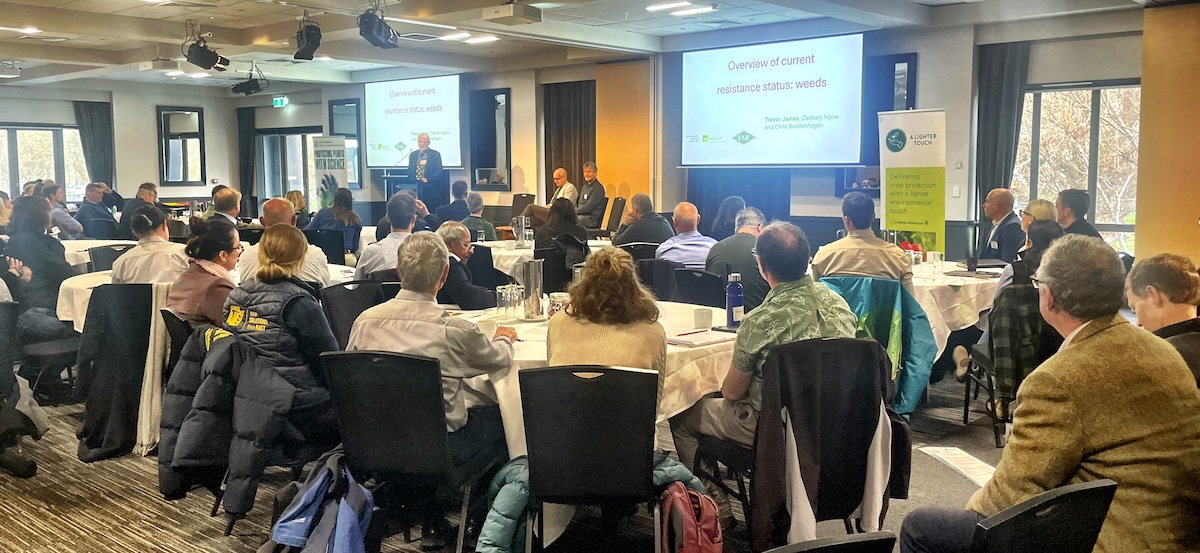
That was the wake-up call issued by opening speaker Fenton Hazelwood at the New Zealand Plant Protection Society (NZPPS) resistance management symposium in Christchurch last month.
Co-hosted by A Lighter Touch (ALT) and NZPPS, 130 attendees heard from scientists, growers, industry, crop protection companies and regulators during the day-long event, titled Pesticide Resistance – Better managing the way forward.
The symposium, which featured 16 presentations and a panel discussion, discussed the current state of resistance management, both in New Zealand and overseas, along with interim and long-term solutions across different sectors.
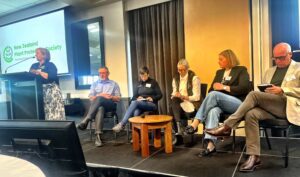
NZPPS Symposium panel discussion (from left) are Jo Drummond, Kevin Manning, Cynthia Christie, Mel Walker, Matilda Gunnarsson and Tim Herman.
Case studies discussed how resistance has been addressed in specific crops and New Zealand regulatory bodies, the Environmental Protection Authority (EPA) and NZ Food Safety (NZFS), responsible for Agricultural Compounds and Veterinary Medicine (ACVM) registrations, presented updates on work underway to modernise the regulatory system.
In his address Fenton, key account management/business development at West Ag, said resistance management in New Zealand was “a change problem and not a chemistry problem.”
He warned New Zealand will not get a second chance when it comes to addressing the developing issue of pesticide resistance. “Resistance management is not a future problem, it’s here now.”
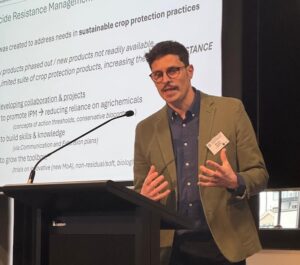
ALT transitional technical lead Bruno Gatimel.
There was a need for greater education, better engagement with growers, and bold change supported by sector-wide cohesion and alignment. “Boldness isn’t optional; it’s survival. If we wait for the perfect moment to act, that moment will arrive too late,” he said.
ALT transitional technical lead Bruno Gatimel presented on the future development and ongoing maintenance of New Zealand’s resistance management strategies, and work flowing from a recent resistance management workshop ALT hosted involving a cross-sector of industry.
Bruno said resistance management was in ALT’s DNA, with the growing threat of resistance being one of the driver’s behind the programme’s establishment. The programme’s focus of new tools to add to the grower’s toolbox will reduce reliance on agrichemicals, and help extend the life and efficacy of existing chemistry.
Having updated the existing resistance strategies, ALT is now working with industry to determine priorities for new strategies, a system for maintaining and updating them after ALT ends, an industry approach to resistance surveillance and screening and greater resistance management education and extension.
Bruno said an ultimate outcome would be an enduring, self-funded, collaborative resistance management programme owned by the industry.
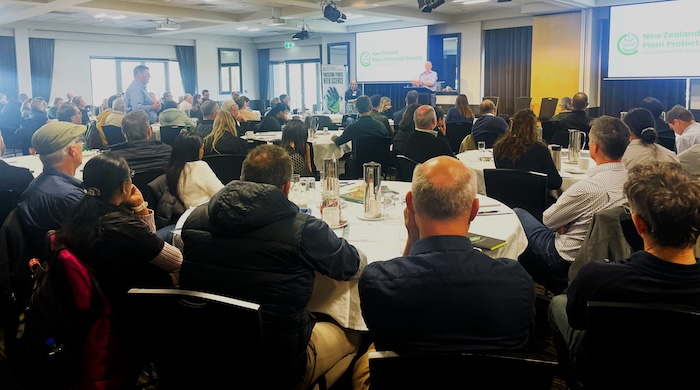
Joel Vanneste from Bioeconomy Science Institute (BSI), Plant & Food Research group, answering questions from the floor following his presentation.
Many presenters spoke about the need for industry and stakeholder collaboration and consistent messaging to ensure resistance management best practice is implemented by all agrichemical users.
ALT programme director Livia Esterhazy gave the closing address, reframing the challenge of pesticide resistance and asking the audience to consider “how do we build resilience in our growers, rather than avoiding resistance?”
She summarised the key points from the day, saying the complexity of resistance requires collaboration, coordination, clarity, consistent communication and continuity.
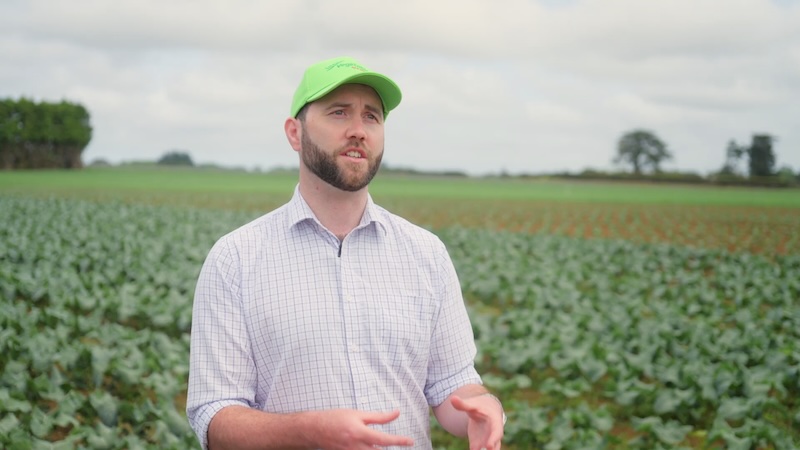
Vegetables New Zealand and Onions New Zealand research development and extensions manager Daniel Sutton.
Reflecting on the symposium, Vegetables New Zealand and Onions New Zealand research development and extensions manager Daniel Sutton described resistance as the crop protection issue that could bring the industry “to our knees”.
He too wants to see the industry convert talk into action.
“My concern is the room is an echo chamber…[everyone at the symposium] is aware resistance is an issue we need to stay on top of. How do we how do we use the symposium as a launchpad, how do we actually take off and engage with industry collaboratively to not just keep things ticking over, but to actually get change embedded within our system?” Daniel says.
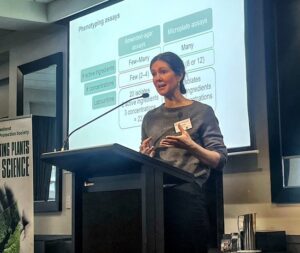
Rachael Warren of Bioeconomy Science Institute (BSI), Plant & Food Research group, presents about resistance monitoring.
Grower and Vegetables New Zealand board member Robert Lindsay, of Island Horticulture, attended the symposium. “The outcome everyone wants is successful growers supplying fruit and vegetables to New Zealand at fair prices.
“Integrated pest management is integral to success going forward, and as part of that growers need access to new biological products and softer chemistry. Without that access we’re hamstrung. Those involved in evaluating and approving new biologicals and chemistry need to work together with industry to achieve this.”
The NZPPS symposium committee warmly thanks sponsors for their support, being ALT, Corteva Agriscience, PGG Wrightson/Fruitfed Supplies, Vegetables NZ, Onions NZ, Potatoes NZ, TomatoesNZ, Adama/Grochem and Bioeconomy Science Institute, Plant & Food Research group.
