
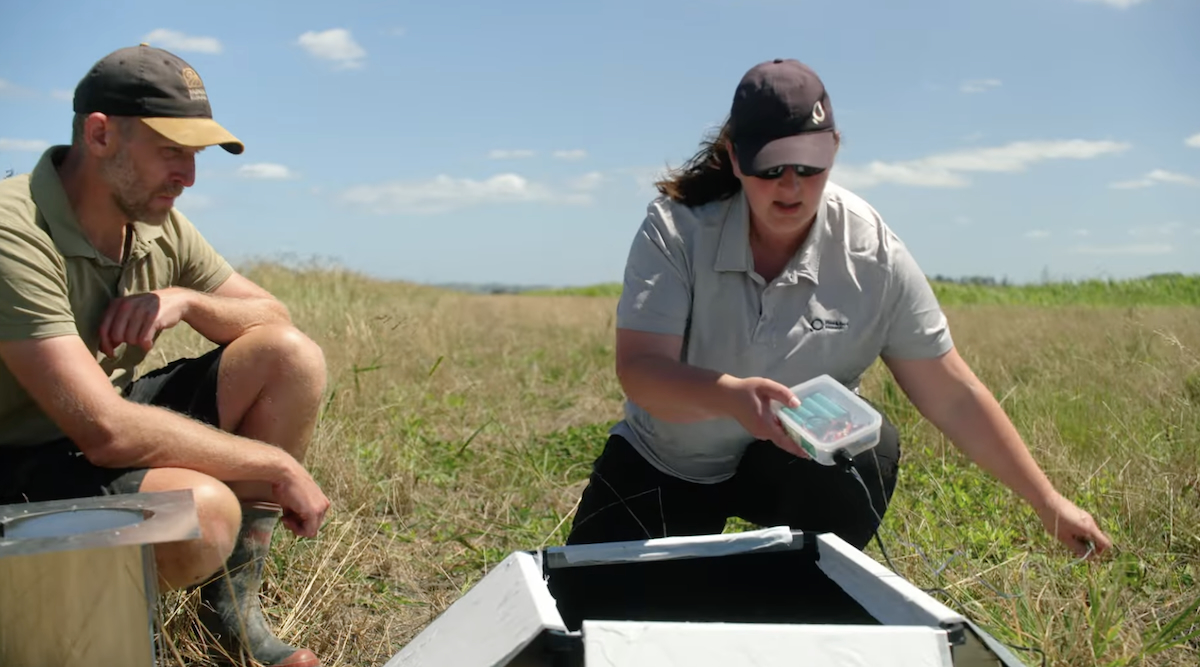
Finalising the low-cost, 3D-printable trap and acoustic caller, and developing guidance for using this technology are the next steps for the Vegetables New Zealand-A Lighter Touch project seeking new control options for black field cricket.
The project had two main objectives, developing ‘a lure and trap’ tool to capture crickets, and investigating a possible ‘infect and release’ step, to see if a bioinsecticide could be used to kill the pest.
Bioeconomy Science Institute – Maiangi Taiao trialled two bioinsecticides in the laboratory to see if they would kill crickets. While neither bioinsecticide proved lethal to the pest, the trials did add value in developing a robust trial protocol to evaluate bioinsecticides for cricket control in the future.

The trap prototype used in the trials. Credit: BSI
BSI scientist and project lead Sophie Hunt says taking the bioinsecticide component off the table does not impact the success of the project as the lure and trap component has already proved effective. The focus is now on refining aspects of the 3D printed trap design, and establishing the range it is luring crickets from.
“We’ve got a very simple and effective trap – it will be an available tool for growers to help them control black field cricket, and they can set it up themselves.
“This season’s field testing of trap design will focus on trialling different filaments used for the 3D printing process of the trap doors, to determine which one lasts longer in field conditions. We’ll also be doing mark, capture, release and recapture tests to determine trap range,” Sophie says.

Black field cricket, marked with paint, for a release and recapture test to determine trap range.
“Another aspect is gathering seasonal data to understand when the traps are likely to most effective. We have a new weather station, so we will be able to link the amount of crickets caught with temperature and rainfall.”
The project team is working on a grower guide containing information about how to set up the trap, where to purchase the materials to build your own trap, a 3D printing guide, and the optimum timing to deploy the trap. It will also include information about how to dispose of the trapped crickets, which could then be used for chicken feed.
A field walk and demonstration event for vegetable growers will launch the trap and guidance in the Dargaville area later this summer. Further information will be shared in sector group newsletters and via ALT communications channels.
Black field cricket (Teleogryllus commodus) is a serious pest for vegetables (especially kūmara) and pasture in northern areas of New Zealand. Control options are limited, and the risk of resistance development due to the limited modes of action is high and of concern to growers.
All life stages of the cricket feed on kūmara tubers underground, resulting in damage which can lead to crop losses of $10,000 to $30,000 per hectare depending on market pricing. While complete crop loss is rare, in some cases entire fields can be rendered worthless due to feeding damage.
Learn more about the project on the Control of black field cricket project page.
